
Androgenetic Alopecia
Androgenetic Alopecia: Symptoms, and Treatment Options
Androgenetic Alopecia, also known as pattern baldness, is the most common cause of hair loss in both men and women. This condition is primarily driven by genetics and hormonal changes, leading to gradual hair thinning and eventual hair loss. If you’re experiencing thinning hair, you may be dealing with Androgenetic Alopecia.
What is Androgenetic Alopecia?
Androgenetic Alopecia is a hereditary condition characterized by hair loss caused by the hormone dihydrotestosterone (DHT). DHT weakens hair follicles, causing them to shrink and eventually stop producing hair. This type of hair loss typically occurs gradually and can affect both men and women, although the patterns of hair loss differ between the sexes.
- In men, Androgenetic Alopecia often starts with a receding hairline and thinning at the crown, forming the classic “M” shape.
- In women, the condition causes diffuse thinning across the scalp, particularly at the crown and parting line, with no complete baldness.
Symptoms of Androgenetic Alopecia
The signs of Androgenetic Alopecia vary between men and women:
In Men:
- Receding hairline
- Thinning at the crown or top of the head
- Bald spots forming over time
In Women:
- Thinning hair, especially at the crown and part line
- Widening of the hair part
- Less visible bald patches (compared to men)
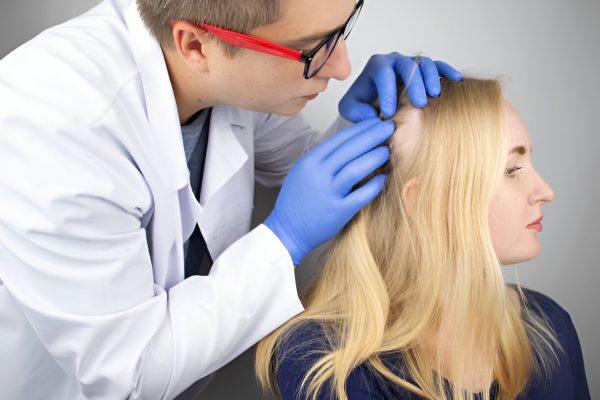
Treatment Options for Androgenetic Alopecia
While Androgenetic Alopecia cannot be completely cured, there are several effective treatment options available to slow down hair loss and promote hair regrowth:
1. Minoxidil (Rogaine)
Minoxidil is an over-the-counter topical solution that stimulates hair follicles, encouraging hair growth and slowing hair loss.
2. Finasteride (Propecia)
Finasteride is an oral medication that blocks the production of DHT, helping to prevent further hair thinning in men. It is not recommended for women due to potential side effects.
3. Hair Transplant Surgery
Hair restoration procedures, such as Follicular Unit Extraction (FUE) and Follicular Unit Transplantation (FUT), involve transplanting healthy hair follicles from a donor area to thinning or bald spots on the scalp.
4. Platelet-Rich Plasma (PRP) Therapy
PRP therapy uses your own blood plasma to stimulate dormant hair follicles and encourage hair regrowth. It’s a non-surgical, minimally invasive treatment option.
5. Low-Level Laser Therapy (LLLT)
Laser devices, such as laser combs or helmets, help stimulate hair follicles by increasing blood flow to the scalp, encouraging healthy hair growth.